
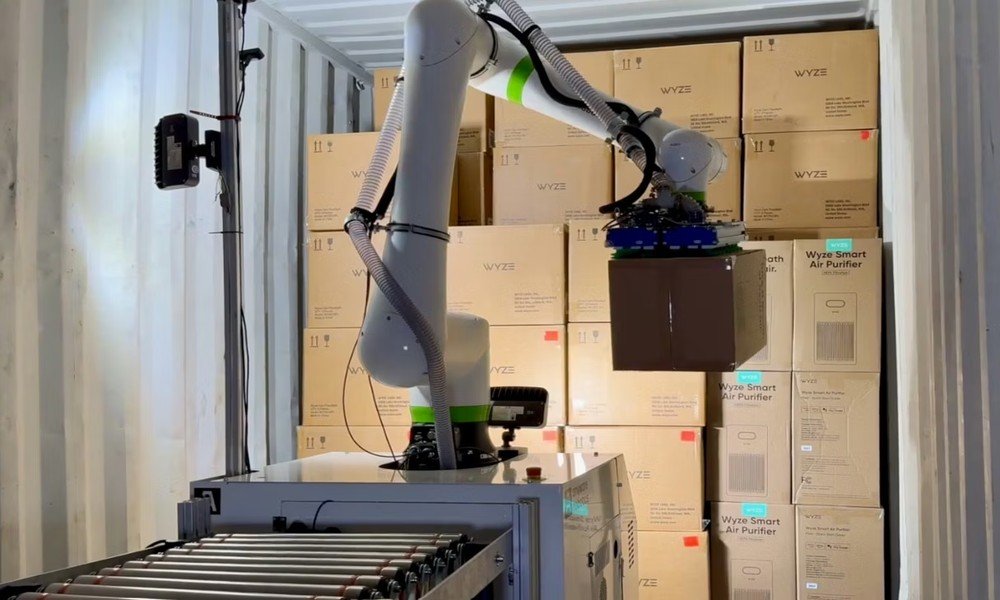
As food manufacturers continue to pursue higher efficiency, consistency, and automation, integrating a robot depalletizer into an existing production line has become a strategic upgrade. However, successful integration requires more than simply installing equipment-it involves careful planning, system compatibility, and process optimization.
Evaluate Your Current Production Line
Before introducing a robot depalletizer, it is essential to assess the current production setup. This includes:
- Existing conveyor layouts and available space
- Types of products (cartons, bags, bottles, etc.)
- Pallet configurations and stacking patterns
- Current throughput and bottlenecks
Understanding these factors helps determine the most suitable depalletizing solution and ensures the new system aligns with production goals. It also identifies whether upstream or downstream adjustments are required.
Define Integration Objectives
Clear objectives guide the entire integration process. Common goals include:
- Increasing throughput and efficiency
- Reducing manual labor and operational costs
- Improving workplace safety
- Enhancing product handling consistency
For many facilities, the robot depalletizer becomes part of a broader loading and unloading system, working alongside conveyors, palletizers, and packaging equipment. Defining how the depalletizer fits into this workflow is critical.
Select the Right Robot Depalletizer
Choosing the appropriate system depends on your production requirements. Key factors include:
- Payload capacity and reach
- Gripper type (vacuum, clamp, or hybrid)
- Product variety and packaging types
- Required speed and cycle time
In the food industry, flexibility is especially important. A well-designed robotic system should handle multiple product formats without extensive reconfiguration.
Plan Layout and Space Optimization
Integrating a robot depalletizer into an existing line often involves space constraints. Effective layout planning should consider:
- Robot working envelope
- Pallet infeed and empty pallet outfeed
- Safety zones and guarding
- Maintenance access
A compact and optimized layout minimizes disruption while ensuring safe and efficient operation. Before installation, the integration is frequently visualized using simulation tools.
Ensure Seamless System Integration
One of the most critical steps is connecting the robot depalletizer with existing equipment and control systems. This includes:
- Synchronizing with conveyor systems
- Integrating with PLC or SCADA systems
- Coordinating with upstream and downstream processes
A properly integrated system ensures smooth material flow and prevents bottlenecks. The depalletizer should operate as part of a unified automation solution rather than as a standalone unit.
Address Food Safety and Hygiene Requirements
In food production environments, hygiene is a top priority. When integrating a robot depalletizer, consider:
- Use of food-grade materials and coatings
- Easy-to-clean surfaces and designs
- Protection against dust, moisture, and contamination
Automation reduces direct human contact with products, which can significantly improve overall hygiene standards. This plays a vital role in delicate sectors like dairy, beverage production, and ready-to-eat food processing.
Implement Safety Measures
Safety is essential when introducing robotics into an existing facility. Key safety considerations include:
- Physical guarding and fencing
- Emergency stop systems
- Light curtains or safety scanners
- Operator training and safety protocols
Modern robotic depalletizers are designed with advanced safety features, allowing them to operate efficiently while protecting workers.
Test, Commission, and Optimize
After installation, thorough testing and commissioning are required to ensure optimal performance. This stage involves:
- Verifying system synchronization
- Testing different product types and pallet patterns
- Adjusting robot speed and motion paths
- Identifying and resolving any operational issues
Continuous optimization after deployment helps maximize efficiency and adapt to changing production needs.
Train Operators and Maintenance Teams
Successful integration also depends on people. Training should cover:
- System operation and monitoring
- Basic troubleshooting
- Routine maintenance procedures
A well-trained team ensures smooth daily operation and minimizes downtime.
Plan for Future Scalability
Finally, consider long-term scalability. In addition to satisfying present demands, a robot depalletizer should facilitate future expansion. Flexible systems can be expanded or reprogrammed as production demands evolve.
In many modern facilities, the depalletizer is integrated into a fully automated loading and unloading system, forming a key component of end-of-line automation.
Conclusion
Integrating a robot depalletizer into an existing food production line is a strategic investment that can significantly improve efficiency, safety, and product handling consistency. By carefully evaluating current operations, selecting the right system, and ensuring seamless integration, manufacturers can achieve a smooth transition to automation.
With proper planning and execution, a robot depalletizer becomes more than just a machine-it becomes a vital part of a smarter, more efficient food production ecosystem.
